• BUYING AN ANTHEM HOME? Click here to search for it here!
  • Home
  • Blog Page
  • Have a Question?

All About Anthem, Arizona

Learn About Anthem Arizona Community

  • Anthem Schools
  • Anthem Neighborhoods
    • Parkside – East and West
    • Country Club
    • The Landings
    • The Villages
    • The Paseos
  • Anthem Floor Plans
    • Anthem Country Club Floor Plans
    • Anthem Parkside Floor Plans
  • Anthem Community Park
  • 🎉 Welcome Home to Anthem
  • 🏡 Real Estate Agents in 85086, Arizona – Work with a Proven North Valley Expert

How Technology Is Enabling the Real Estate Process

How Technology is Enabling the Real Estate Process
Shot of afro american young man in a home office using laptop and taking notes. Black guy sitting at table and working from home office.

Today’s everyday reality is pretty different than it looked just a few weeks ago. We’re learning how to do a lot of things in new ways, from how we work remotely to how we engage with our friends and neighbors. Almost everything right now is shifting to a virtual format. One of the big changes we’re adapting to is the revisions to the common real estate transaction, which all vary by state and locality. Technology, however, is making it possible for many of us to continue on the quest for homeownership, an essential need for all.

Here’s a look at some of the elements of the process that are changing (at least in the near-term), due to stay-at-home orders and social distancing, and what you may need to know about each one if you’re thinking of buying or selling a home sooner rather than later.

1. Virtual Consultations – Instead of heading into an office, you can meet with real estate and lending professionals through video chat. Whether it’s your first initial needs analysis as a buyer or your listing appointment as a seller, you can still get the process started remotely and create a plan together. Your trusted advisor is still on your side.

2. Home Searches & Virtual Showings – According to theNational Association of Realtors (NAR), the Internet is one of the three most popular information sources buyers use when searching for homes. Your real estate agent can send you listing information and help you request a virtual showing when you’re ready to start looking. This means you can virtually walk through the homes on your wish list while keeping your family safe. As a seller, you can still have virtual open houses and virtual tours too, so as not to miss those buyers looking to find a home right now.

3. Document Signing – Although this is another area that varies by state, today more portions of the transaction are being done digitally. In many areas, your agent or loan officer can set up an account where you can upload all of the required documents and sign electronically right from your computer.

4. Sending Money – Whether you need to pay for an appraisal or submit closing costs, there are options available. Depending on the transaction and local regulations, you may be able to pay by credit card, and most banks will also allow you to wire funds from your account. Sometimes you can send a check by mail, and in some states, a mobile escrow agent will pick up a check from your home.

5. Closing Process – Again, depending on your area, a mobile notary may be able to bring the required documents to your home before the closing. If your state requires an attorney to be present, check with your legal counsel to see what options are available. Also, depending on the title company, some are allowing drive-thru closings, which is similar to doing a transaction at a bank window.

Although these virtual processes are starting to become more widely accepted, it does not mean that this is the way things are going to get done from now on. Under the current circumstances, however, technology is making it possible to continue much of the real estate transaction today.

Bottom Line

If you need to move today, technology can help make it happen; there are options available. Let’s touch base today to discuss your situation and our local regulations, so you don’t have to put your real estate plans on hold.

If you’re interested in purchasing or selling a home you can start by Contacting Us directly or start searching for your new home here Anthem, New River, Phoenix, Mesa, Scottsdale, Tempe, Glendale or Surprise, Desert Hills.

Leave a Comment

What You Can Do to Get Your House Ready to Sell [INFOGRAPHIC]

What You Can Do To Get Ready To Sell Your House

Some Highlights:

  • Believe it or not, there are lots of things you can do to prep your house for a sale without even going to the store.
  • Your real estate plans don’t have to be completely on hold even while we’ve hit the pause button on other parts of daily life.
  • Tackling small projects from cleaning the corners you may normally skip to tidying up your yard are easy and necessary wins if you’re thinking of listing your house and making a move.

If you’re interested in purchasing or selling a home you can start by Contacting Us directly or start searching for your new home here Anthem, New River, Phoenix, Mesa, Scottsdale, Tempe, Glendale or Surprise, Desert Hills.

Leave a Comment

Two Big Myths in the Homebuying Process

Two Big Myths in the Home Buying Process
Happy man and woman with laptop fist bumping in modern office

The 2020 Millennial Home Buyer Report shows how this generation is not really any different from previous ones when it comes to homeownership goals:

“The majority of millennials not only want to own a home, but 84% of millennials in 2019 considered it a major part of the American Dream.”

Unfortunately, the myths surrounding the barriers to homeownership – especially those related to down payments and FICO® scores – might be keeping many buyers out of the arena. The piece also reveals:

“Millennials have to navigate a lot of obstacles to be able to own a home. According to our 2020 survey, saving for a down payment is the biggest barrier for 50% of millennials.”

Millennial or not, unpacking two of the biggest myths that may be standing in the way of homeownership among all generations is a great place to start the debunking process.

Myth #1: “I Need a 20% Down Payment”

Many buyers often overestimate what they need to qualify for a home loan. According to the same article:

“A down payment of 20% for a home of that price [$210,000] would be about $42,000; only about 30% of the millennials in our survey have enough in savings to cover that, not to mention the additional closing costs.”

While many potential buyers still think they need to put at least 20% down for the home of their dreams, they often don’t realize how many assistance programs are available with as little as 3% down. With a bit of research, many renters may be able to enter the housing market sooner than they ever imagined.

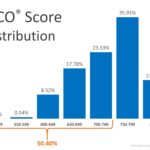
Myth #2: “I Need a 780 FICO® Score or Higher”

In addition to down payments, buyers are also often confused about the FICO® score it takes to qualify for a mortgage, believing they need a credit score of 780 or higher.

FICO Score Distribution

Ellie Mae’s latest Origination Insight Report, which focuses on recently closed (approved) loans, shows the truth is, over 50% of approved loans were granted with a FICO® score below 750 (see graph below):Even today, many of the myths of the homebuying process are unfortunately keeping plenty of motivated buyers on the sidelines. In reality, it really doesn’t have to be that way.

Bottom Line

If you’re thinking of buying a home, you may have more options than you think. Let’s connect to answer your questions and help you determine your next steps.

If you’re interested in purchasing or selling a home you can start by Contacting Us directly or start searching for your new home here Anthem, New River, Phoenix, Mesa, Scottsdale, Tempe, Glendale or Surprise, Desert Hills.
Leave a Comment

Three Reasons Why This Is Not a Housing Crisis

Three Reasons Why This Is Not a Housing Crisis
Portrait of woman sitting on the floor of living room meditating

In times of uncertainty, one of the best things we can do to ease our fears is to educate ourselves with research, facts, and data. Digging into past experiences by reviewing historical trends and understanding the peaks and valleys of what’s come before us is one of the many ways we can confidently evaluate any situation. With concerns of a global recession on everyone’s minds today, it’s important to take an objective look at what has transpired over the years and how the housing market has successfully weathered these storms.

1. The Market Today Is Vastly Different from 2008

We all remember 2008. This is not 2008. Today’s market conditions are far from the time when housing was a key factor that triggered a recession. From easy-to-access mortgages to skyrocketing home price appreciation, a surplus of inventory, excessive equity-tapping, and more – we’re not where we were 12 years ago. None of those factors are in play today. Rest assured, housing is not a catalyst that could spiral us back to that time or place.

According to Danielle Hale, Chief Economist at Realtor.com, if there is a recession:

“It will be different than the Great Recession. Things unraveled pretty quickly, and then the recovery was pretty slow. I would expect this to be milder. There’s no dysfunction in the banking system, we don’t have many households who are overleveraged with their mortgage payments and are potentially in trouble.”

Goldman Sachs GDP Forecast

In addition, the Goldman Sachs GDP Forecast released this week indicates that although there is no growth anticipated immediately, gains are forecasted heading into the second half of this year and getting even stronger in early 2021.Both of these expert sources indicate this is a momentary event in time, not a collapse of the financial industry. It is a drop that will rebound quickly, a stark difference to the crash of 2008 that failed to get back to a sense of normal for almost four years. Although it poses plenty of near-term financial challenges, a potential recession this year is not a repeat of the long-term housing market crash we remember all too well.

2. A Recession Does Not Equal a Housing Crisis

Recession Not Equal Housing Crisis

Next, take a look at the past five recessions in U.S. history. Home values actually appreciated in three of them. It is true that they sank by almost 20% during the last recession, but as we’ve identified above, 2008 presented different circumstances. In the four previous recessions, home values depreciated only once (by less than 2%). In the other three, residential real estate values increased by 3.5%, 6.1%, and 6.6% (see below):

3. We Can Be Confident About What We Know

Concerns about the global impact COVID-19 will have on the economy are real. And they’re scary, as the health and wellness of our friends, families, and loved ones are high on everyone’s emotional radar.

According to Bloomberg,

“Several economists made clear that the extent of the economic wreckage will depend on factors such as how long the virus lasts, whether governments will loosen fiscal policy enough and can markets avoid freezing up.”

That said, we can be confident that, while we don’t know the exact impact the virus will have on the housing market, we do know that housing isn’t the driver.

The reasons we move – marriage, children, job changes, retirement, etc. – are steadfast parts of life. As noted in a recent piece in the New York Times, “Everyone needs someplace to live.” That won’t change.

Bottom Line

Concerns about a recession are real, but housing isn’t the driver. If you have questions about what it means for your family’s homebuying or selling plans, let’s connect to discuss your needs.

If you’re interested in purchasing or selling a home you can start by Contacting Us directly or start searching for your new home here Anthem, New River, Phoenix, Mesa, Scottsdale, Tempe, Glendale or Surprise, Desert Hills.

Leave a Comment

Buying a Home: Do You Know the Lingo? [INFOGRAPHIC]

Buying a Home: Do You Know the Lingo? [INFOGRAPHIC]

Highlights:

  • Buying a home can be intimidating if you’re not familiar with the terms used throughout the process.
  • To point you in the right direction, here’s a list of some of the most common language you’ll hear along the way.
  • The best way to ensure your homebuying process is a positive one is to find a real estate professional who will guide you through every aspect of the transaction with ‘the heart of a teacher.’

If you’re interested in purchasing or selling a home you can start by Contacting Us directly or start searching for your new home here Anthem, New River, Phoenix, Mesa, Scottsdale, Tempe, Glendale or Surprise, Desert Hills.

Leave a Comment

Are We About to See a New Wave of Foreclosures?

Are We About to See a New Wave of Foreclosures?
Japanese male surfer with surf board waiting for having a chance to get good waves.

With all of the havoc being caused by COVID-19, many are concerned we may see a new wave of foreclosures. Restaurants, airlines, hotels, and many other industries are furloughing workers or dramatically cutting their hours. Without a job, many homeowners are wondering how they’ll be able to afford their mortgage payments.

In spite of this, there are actually many reasons we won’t see a surge in the number of foreclosures like we did during the housing crash over ten years ago. Here are just a few of those reasons:

The Government Learned its Lesson the Last Time

During the previous housing crash, the government was slow to recognize the challenges homeowners were having and waited too long to grant relief. Today, action is being taken swiftly. Just this week:

  • The Federal Housing Administration indicated it is enacting an “immediate foreclosure and eviction moratorium for single family homeowners with FHA-insured mortgages” for the next 60 days.
  • The Federal Housing Finance Agency announced it is directing Fannie Mae and Freddie Mac to suspend foreclosures and evictions for “at least 60 days.”

Homeowners Learned their Lesson the Last Time

When the housing market was going strong in the early 2000s, homeowners gained a tremendous amount of equity in their homes. Many began to tap into that equity. Some started to use their homes as ATM machines to purchase luxury items like cars, jet-skis, and lavish vacations. When prices dipped, many found themselves in a negative equity situation (where the mortgage was greater than the value of their homes). Some just walked away, leaving the banks with no other option but to foreclose on their properties.

Today, the home equity situation in America is vastly different. From 2005-2007, homeowners cashed out $824 billion worth of home equity by refinancing. In the last three years, they cashed out only $232 billion, less than one-third of that amount. That has led to:

  • 37% of homes in America having no mortgage at all
  • Of the remaining 63%, more than 1 in 4 having over 50% equity

Even if prices dip (and most experts are not predicting that they will), most homeowners will still have vast amounts of value in their homes and will not walk away from that money.

There Will Be Help Available to Individuals and Small Businesses

The government is aware of the financial pain this virus has caused and will continue to cause. Yesterday, the Associated Press reported:

“In a memorandum, Treasury proposed two $250 billion cash infusions to individuals: A first set of checks issued starting April 6, with a second wave in mid-May. The amounts would depend on income and family size.”

The plan also recommends $300 billion for small businesses.

Bottom Line

These are not going to be easy times. However, the lessons learned from the last crisis have Americans better prepared to weather the financial storm. For those who can’t, help is on the way.

If you’re interested in purchasing or selling a home you can start by Contacting Us directly or start searching for your new home here Anthem, New River, Phoenix, Mesa, Scottsdale, Tempe, Glendale or Surprise, Desert Hills

Leave a Comment

Economic Slowdown: What the Experts Are Saying

Economic Slowdown: What the Experts Are Saying

More and more economists are predicting a recession is imminent as the result of the pullback in the economy caused by COVID-19. According to the National Bureau of Economic Research:

“A recession is a significant decline in economic activity spread across the economy, lasting more than a few months, normally visible in real GDP, real income, employment, industrial production, and wholesale-retail sales.”

Bill McBride, the founder of Calculated Risk, believes we are already in a recession:

“With the sudden economic stop, and with many states shutting down by closing down schools, bars and restaurants…my view is the US economy is now in a recession (started in March 2020), and GDP will decline sharply in Q2. The length of the recession will depend on the course of the pandemic.”

How deep will it go?

Goldman Sachs GDP Forecast

No one knows for sure. It depends on how long it takes to beat this virus. Goldman Sachs anticipates we will see a difficult first half of the year, but the economy will recover in the second half (see below):This aligns with the projection from Wells Fargo Investment Institute:

“Once the virus infection rate peaks, we expect a recovery to gain momentum into the final quarter of the year and especially into 2021.”

Again, no one knows for sure how long the pandemic will last. The hope is that it will resolve sometime over the next several months. Most agree that when it does, the economy will regain its strength quickly.

Bottom Line

This virus is not only impacting the physical health of Americans, but also the financial health of the nation. The sooner we beat it, the sooner our lives will return to normal.

If you’re interested in purchasing or selling a home you can start by Contacting Us directly or start searching for your new home here Anthem, New River, Phoenix, Mesa, Scottsdale, Tempe, Glendale or Surprise, Desert Hills.

Leave a Comment

Why the Stock Market Correction Probably Won’t Impact Home Values

Why the Stock Market Correction Probably Won’t Impact Home Values
Stand out from the crowd and different concepts One light balloon glowing and floating above other white balloons on white wall background with window reflections and shadows 3D rendering

With the housing crash of 2006-2008 still visible in the rear-view mirror, many are concerned the current correction in the stock market is a sign that home values are also about to tumble. What’s taking place today, however, is nothing like what happened the last time. The S&P 500 did fall by over fifty percent from October 2007 to March 2009, and home values did depreciate in 2007, 2008, and 2009 – but that was because that economic slowdown was mainly caused by a collapsing real estate market and a meltdown in the mortgage market.

This time, the stock market correction is being caused by an outside event (the coronavirus) with no connection to the housing industry. Many experts are saying the current situation is much more reminiscent of the challenges we had when the dot.com crash was immediately followed by 9/11. As an example, David Rosenberg, Chief Economist with Gluskin Sheff + Associates Inc., recently explained:

“What 9/11 has in common with what is happening today is that this shock has also generated fear, angst and anxiety among the general public. People avoided crowds then as they believed another terrorist attack was coming and are acting the same today to avoid getting sick. The same parts of the economy are under pressure ─ airlines, leisure, hospitality, restaurants, entertainment ─ consumer discretionary services in general.”

Why the Stock Market Correction Probably Won’t Impact Home Values

Since the current situation resembles the stock market correction in the early 2000s, let’s review what happened to home values during that time.The S&P dropped 45% between September 2000 and October 2002. Home prices, on the other hand, appreciated nicely at the same time. That stock market correction proved not to have any negative impact on home values.

Bottom Line

If the current situation is more like the markets in the early 2000s versus the markets during the Great Recession, home values should be minimally affected, if at all.

If you’re interested in purchasing or selling a home you can start by Contacting Us directly or start searching for your new home here Anthem, New River, Phoenix, Mesa, Scottsdale, Tempe, Glendale or Surprise, Desert Hills.

Leave a Comment

A Recession Does Not Equal a Housing Crisis [INFOGRAPHIC]

A Recession Does Not Equal a Housing Crisis

Some Highlights

  • The COVID-19 pandemic is causing an economic slowdown.
  • The good news is, home values actually increased in 3 of the last 5 U.S. recessions and decreased by less than 2% in the 4th.
  • All things considered, an economic slowdown does not equal a housing crisis, and this will not be a repeat of 2008.

If you’re interested in purchasing or selling a home you can start by Contacting Us directly or start searching for your new home here Anthem, New River, Phoenix, Mesa, Scottsdale, Tempe, Glendale or Surprise, Desert Hills.

Leave a Comment

The Economic Impact of Buying a Home

The Economic Impact of Buying a Home
key chain home form on the coin in the middle of the puzzle

We’re in a changing real estate market, and life, in general, is changing too – from how we grocery shop and meal prep to the ways we can interact with our friends and neighbors. Even practices for engaging with agents, lenders, and all of the players involved in a real estate transaction are changing to a virtual format. What isn’t changing, however, is one key thing that can drive the local economy: buying a home.

We’re all being impacted in different ways by the effects of the coronavirus. If you’re in a position to buy a home today, know that you’re a major economic force in your neighborhood. And while we all wait patiently for the current pandemic to pass, there are a lot of things you can do in the meantime to keep your home search on track.

Every year the National Association of Realtors (NAR) shares a report that notes the full economic impact of home sales. This report summarizes:

“The total economic impact of real estate related industries on the state economy, as well as the expenditures that result from a single home sale, including aspects like home construction costs, real estate brokerage, mortgage lending and title insurance.”

Here’s the breakdown of how the average home sale boosts the economy:When you buy a home, you’re making an impact. You’re fulfilling your need for shelter and a place to live, and you’re also generating jobs and income for the appraiser, the loan officer, the title company, the real estate agent, and many more contributors to the process. For every person or business that you work with throughout the transaction, there’s also likely a team behind the scenes making it all happen, so the effort multiplies substantially. As noted above in the circle on the right, the impact is almost double when you purchase new construction, given the extra labor it requires to build the home.

Average Economic Impact of One Home Sale by State

The report also breaks down the average economic impact by state:As a buyer, you have an essential need for a home – and you can make an essential impact with homeownership, too. That need for shelter, comfort, and a safe place to live will always be alive and well. And whenever you’re able to act on that need, whether now or later, you’ll truly be creating gains for you, your family, local business professionals, and the overall economy.

Bottom Line

Whenever you purchase a home, you’re an economic driver. Even if you’re not ready or able to make a move now, there are things you can do to keep your own process moving forward so you’re set when the time is right for you. Let’s connect to keep your home search – and your local contributions – on track.

If you’re interested in purchasing or selling a home you can start by Contacting Us directly or start searching for your new home here Anthem, New River, Phoenix, Mesa, Scottsdale, Tempe, Glendale or Surprise, Desert Hills.

Leave a Comment

  • « Previous Page
  • 1
  • …
  • 32
  • 33
  • 34
  • 35
  • 36
  • …
  • 46
  • Next Page »

Anthem Homes and Lifestyle

Anthem Homes and Lifestyle

Patterson Real Estate Group

Patterson Real Estate Group

Facebook – Other Pages to Follow

Anthem Community Facebook Page

Living North Valley Facebook Page

Explore Subjects

Recent Posts

  • ACCCA Gates, Property and Patrol Committee Meeting
  • Music in May- Special Encore Performance by The Deadline
  • ACCCA Board of Directors Administrative Meeting
  • Parkside Architectural Review Committee Meeting
  • Public Safety Roundtable

Archives

© 2026 AllAboutAnthem.com 2012 - 2025